






 ₹https://stores.glenindia.com/locator/nagpur/gokulpeth/capella-kitchen-appliances-makarand-agencies-in-gokulpeth-nagpur--5vtRlR/articles/3-burner-vs-4-burner-gas-stove-which-one-suits-you--e4d724cb-c5e0-43ba-8d15-9bb5a056f68c
Capella Kitchen Appliances - Makarand Agencies, Gokulpeth, nagpur
Shop No 3-4 , Swami Samarth Complex, Bazar Road, Opposite Yawale Chai, Gokulpeth, nagpur, maharashtra - 440010
Capella Kitchen Appliances - Makarand Agencies Social Feeds in Gokulpeth, nagpur
3 Burner vs 4 Burner Gas Stove: Which One Suits You?
Most people choose a gas stove by family size. Your cooking routine matters more. A couple who cooks dal, sabzi, rice and rotis together every evening may need more burners than a larger family that eats simply. This guide helps you settle the 3 burner vs 4 burner gas stove question, along with the 2 burner option, based on how you actually cook.
Start With Your Busiest Cooking Hour
Think about the time of day when the most vessels are on the stove together. In many homes, that is the morning: chai, a pressure cooker for dal, a kadhai for sabzi and a tawa for rotis. Count those vessels and add one for breathing room. That number is a good starting point.
Look at the Burner Mix, Not Just the Count
Burners come in different sizes. A high flame burner suits tadka, frying and quick boiling. A big burner handles everyday cooking. A small burner is best for simmering dal, milk or gravies.
Two stoves with the same number of burners can feel very different in use. If you fry often, make sure there is a high flame burner. If you simmer for long periods, a small burner saves you from adjusting the flame constantly.
2 Burner Gas Stove
This suits singles, couples and compact kitchens where one or two dishes are cooked at a time. It takes the least counter space. The trade-off is waiting, since rotis often go on only after the sabzi comes off.
3 Burner Gas Stove
A balanced choice for many Indian homes. You can run a pressure cooker, a kadhai and a tawa together without juggling. It suits families who cook two or three dishes per meal and have a medium-length counter.
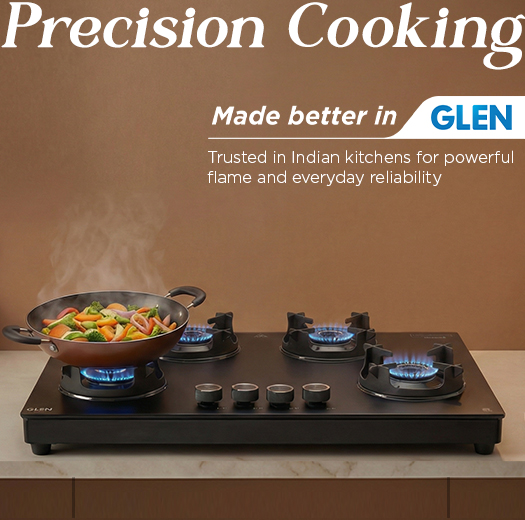
4 Burner Gas Stove
Choose four burners if mornings involve tiffins for several people, if you cook separate meals for elders or children, or if you host often. Check the spacing as well. Two large vessels, such as a big pressure cooker and a wide kadhai, should sit side by side without touching. A 4 burner stove also suits larger and joint families, though it needs a longer counter and often a wider chimney above.
Check Your Space Before You Decide
• Measure the counter length where the stove will sit.
• Make sure the knobs are easy to reach and clear of hot vessels.
• If you have a chimney, check that it is at least as wide as the new stove.
• Note whether your home uses LPG or piped natural gas (PNG), so you choose a compatible model.
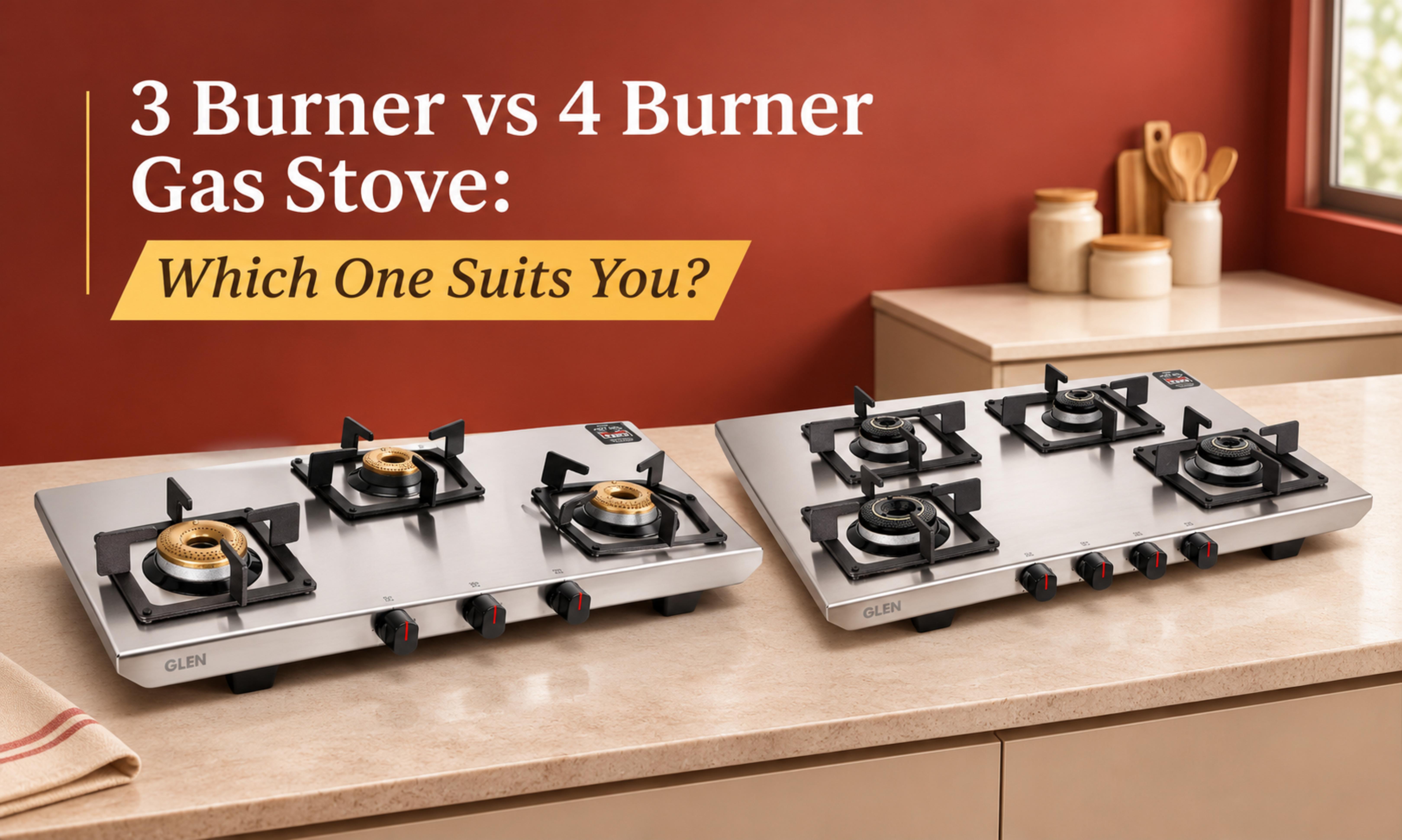
It also helps to see the options in person. Comparing a 3 burner and a 4 burner stove side by side at a store in Gokulpeth shows you the difference in size and spacing far better than a photo.
Quick Self-Check
• How many vessels are on the stove at your busiest hour?
• What is the largest vessel you use regularly?
• How often do you cook for guests?
• Do you mostly fry, simmer or do both?
Gas Safety First
Always have your stove connected by a qualified technician. Any LPG to PNG conversion should be done through authorised service, never at home. If you smell gas, stop cooking, ventilate the kitchen and have the connection checked before using it again.
Conclusion
The right gas stove is the one that matches your busiest cooking hour, with a burner mix that suits the way you cook. Settle the burner count first, then compare finish and features. For those details, read our gas stove buying guide.
Frequently Asked Questions
Is a 3 burner stove enough for a family of four?
Often, yes, if you cook two or three dishes per meal. Choose four burners if your mornings regularly need more vessels at once.
Does a 4 burner stove use more gas than a 3 burner stove?
Gas is used only by the burners you light, so the burner count by itself does not increase consumption.
Will a 4 burner stove fit in a small kitchen?
It can, if the counter is long enough and large vessels fit side by side. Measure the space before you buy.
Can an LPG stove be used with PNG?
Many LPG stoves can be converted for PNG through authorised service. Check the model before you buy and never attempt the conversion yourself.
Find the Right Gas Stove
Explore Glen’s 2 burner, 3 burner and 4 burner gas stoves, or visit a Glen store near Gokulpeth, Nagpur to compare models with your counter measurements in hand.