




 ₹https://stores.glenindia.com/locator/panvel/takka/glen-kitchen-appliances-vighnesh-creations-in-takka-panvel--29gllv/articles/best-food-processor-for-daily-indian-cooking-in-pa--3efa52c0-6ad5-4318-9fea-9050c744f40a
Glen Kitchen Appliances - Vighnesh Creations, Takka, panvel
No 17, National Paradise, Nearby Domino's Pizza, Takka, panvel, maharashtra - 410206
Glen Kitchen Appliances - Vighnesh Creations Social Feeds in Takka, panvel
Best Food Processor for Daily Indian Cooking in panvel and Takka
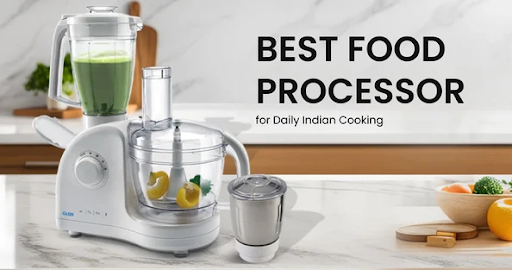
Your evening starts with onions, ginger, garlic, and a tomato, and twenty minutes disappear before the tadka even begins. The best food processor for daily Indian cooking is not the one with the longest feature list, but the one with a motor around 700W, a jar set covering wet and dry work, disc blades for slicing and grating, and parts you can rinse in under two minutes. For a busy kitchen in Takka, choosing the right food processor can make everyday preparation faster and more convenient.
Below is what actually matters, what to spend, and where a food processor stops being the right tool.
What Can a Food Processor Actually Do in an Indian Kitchen?
Indian prep is repetitive and wet. The same onion-tomato-ginger-garlic base sits under most gravies, which is precisely the work a food processor is built to absorb.
Masala base: Onion, tomato, ginger, garlic, and green chilli blitzed to a paste in seconds
Chopping and slicing: Vegetables for sabzi, salad, or a stir-fry, cut to a uniform size
Grating and shredding: Coconut, carrot, paneer, and cheese without the knuckle risk
Atta kneading: Roti and bhatura dough kneaded hands-free
Chutney and dips: Small wet batches in a dedicated jar
Juicing: Citrus for lemonade, and harder fruit on models with a centrifugal attachment
The prep is the part that eats your evening. A guide on what a food processor takes off your hands covers the everyday case in more detail.
What Should You Check Before You Buy a Food Processor?
Daily use is a harder test than occasional use. Five things separate a processor that survives a year of gravies from one that overheats by month three.
Motor Power
Around 700W is the working range for a full-size processor. Anything less is chopper territory, fine for herbs and garlic but not for kneading atta or grinding a tough masala base.
700W heavy-duty motor: Handles dough, hard vegetables, and wet grinding without straining
Overload protection: Cuts the motor before it burns out, which matters most on dough
Speed settings with pulse: Three speeds plus pulse gives you coarse chop and smooth paste from the same blade
Jars and Attachments
The jar count decides how much the machine actually replaces.
Liquidiser jar: Gravies, purees, and smoothies
Dry grinding jar: Everyday dry masala in small batches
Chutney jar: Small wet batches without dirtying the big jar
Citrus and centrifugal juicers: Lemon and orange on the first, apple and carrot on the second
Disc Blades
Discs are the difference between a food processor and a blender. Look for thick slicing, thin slicing, shredding, chipping, and coconut shredding, plus a whisking disc for batters and cream.
Build and Safety
Daily use punishes weak parts, so check the metal and the seals.
Food-grade 304 stainless steel blades: Rust-resistant and keep an edge under daily load
Safety lock: The motor will not start unless the bowl and lid are seated correctly
Oil seals: Stop gravies leaking into the motor housing
Cleaning
A processor you dread washing is a processor you stop using.
Dishwasher-safe jars and attachments: The single biggest factor in daily use
Fewer crevices: Wide-mouth jars rinse faster than narrow ones
Rinse immediately: Turmeric stains plastic within hours, so a quick rinse beats a long scrub
How Much Should You Spend on a Food Processor in India?
Price tracks motor power and attachment count more than anything else. For daily Indian cooking, a full-size 700W food processor is the entry point rather than the luxury option.
A food processor under ₹10,000 covers almost every Indian household. The current in-stock option in Glen's range is a 700W machine with two jars, three stainless steel disc blades, a citrus juicer, three speeds with pulse, overload protection, and dishwasher-friendly parts at ₹7,697, carrying a 2-year product warranty and 5 years on the motor. Prices shift with offers, so check the listing before ordering.
What Do Most People Get Wrong When Buying a Food Processor?
Most food processors end up in a cupboard within a year, and the reason is almost always a mismatch between what was bought and what the kitchen needed. Five mistakes account for nearly all of it.
Buying on jar count: An extra jar looks like value, but a weak motor with four jars is worse than a strong motor with two
Expecting it to replace a grinder: A processor preps, a grinder grinds, and a buyer who wanted the second will resent the first
Buying a chopper by mistake: A small bowl and no disc blades is a chopper, whatever the listing calls it
Ignoring the motor warranty: The motor is what fails under daily dough, so a 5-year motor cover matters more than a longer product warranty
Overfilling the bowl: Load it two-thirds full at most, since a packed jar chops unevenly and throws the whole strain onto the overload protector
A sixth catches people out quietly. A processor bought for a kitchen with no dishwasher, and no habit of rinsing straight after use, stops getting used once the turmeric sets into the plastic. Be honest about who washes up before you buy the machine with the most parts.
Run This Checklist Before You Pay
Eight things to confirm on the listing or in the shop. A no on any of the first four is a reason to keep looking.
Motor: 700W or close to it, not 300W to 500W
Overload protection: Listed on the spec sheet, not assumed
Disc blades: At least slicing, shredding, and grating included
Dishwasher-safe parts: Confirmed for jars and attachments, not just the bowl
Motor warranty: 5 years, checked separately from the product warranty
Blade material: Food-grade 304 stainless steel
Jar set: Covers the wet and dry work you actually do, rather than the highest count
Counter space: Measured, since a full-size processor is not a chopper
Buy for the Prep You Actually Do in Takka
Start with your evening routine, not the spec sheet. If your time disappears into chopping, grating, and kneading, a 700W food processor with a proper disc set pays for itself in a fortnight. If it disappears into grinding masala and batter, a grinder is the better first purchase.
Check the motor warranty, confirm the jars are dishwasher-safe, and buy the machine that matches the work you repeat every single day in your kitchen in panvel.
See the full collection of Glen food processors and choose the one that fits your kitchen and cooking routine in Takka, panvel.