






 ₹https://stores.glenindia.com/locator/-in-thane/-in-kolshet-road/glen-kitchen-appliances-shiv-enterprises-in-kolshet-road-thane--2uukz1/articles/how-to-clean-an-electric-kettle-remove-limescale-in-thane-kitchens--c0973e06-cd6d-4056-87c2-c75ccb4d1ad2
Glen Kitchen Appliances - Shiv Enterprises, Kolshet Road, thane
Shop No 115, Yuvraj Building, Dhokali Naka, Opposite Tribe Hotel, Kolshet Road, thane, maharashtra - 400607
Glen Kitchen Appliances - Shiv Enterprises Social Feeds in Kolshet Road, thane
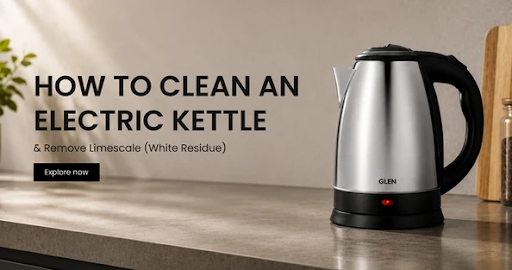
How to Clean an Electric Kettle & Remove Limescale in thane Kitchens
Chalky white flakes are floating in your chai, and the kettle takes longer to boil than it used to. Knowing how to clean an electric kettle comes down to one job: dissolving limescale rather than scrubbing at it. Fill the kettle halfway with equal parts white vinegar and water, boil it, let it sit for an hour, then rinse. The residue lifts on its own.
Below is the full method, what to use if you would rather skip vinegar, and how often to repeat it for your electric kettle in Kolshet Road.
What Is the White Residue in Your Kettle?
The white residue in kettle interiors is limescale, a chalky deposit of calcium and magnesium left behind when hard water boils away. The minerals stay, the water leaves, and over weeks the crust builds up on the base and the element.
Hard water is the whole story here. Much of India runs on it, which is why the need to remove limescale from an electric kettle comes around faster here than in soft-water regions.
Where it forms: On the base, the heating element, and around the water line
What it looks like: White or grey flakes, a chalky film, or gritty powder at the bottom
What it does: Insulates the heating element, so the kettle draws more power and takes longer to boil
Is it harmful: No, calcium and magnesium are minerals your body already takes in from food and water
Left alone, limescale shortens the life of the element. A guide on keeping a kettle running efficiently explains why a scaled element quietly costs you electricity every day.
How Do You Descale an Electric Kettle With Vinegar?
To descale an electric kettle, vinegar is the cheapest and most reliable option, since acetic acid dissolves calcium carbonate without any scrubbing. Set aside an hour, most of it waiting.
Step 1: Unplug and Empty the Kettle
Switch off at the socket, unplug the kettle, and tip out any water. Lift the body off its power base and keep the base well away from the sink, since it must never get wet.
Step 2: Fill With Vinegar and Water
Pour in equal parts white vinegar and water, enough to cover the limescale line. Half filling the kettle is usually plenty, and there is no benefit to going above the maximum mark.
Step 3: Boil, Then Leave It to Work
Boil the mixture, switch the kettle off, and leave it to stand for 30 minutes to an hour. Heavy scale can sit overnight. The acid does the lifting while you get on with your evening.
Step 4: Rinse Until the Smell Is Gone
Tip out the solution, then rinse the interior three or four times with fresh water. Boil one full kettle of clean water and discard it, and repeat that boil if any vinegar smell lingers. Wipe the inside with a soft cloth, never a scouring pad.
Stubborn flakes that survive the soak usually mean the scale was thick. Repeat the cycle rather than reaching for anything abrasive, since scratches on the stainless steel interior of a kettle give future limescale somewhere to grip.
What Can You Use Instead of Vinegar?
Vinegar leaves a smell that some people dislike, and a few kettle manuals advise against it. Three alternatives work on the same principle.
Citric acid: One to two tablespoons in a full kettle of water, boiled and left for 20 minutes, then rinsed. No lingering smell.
Lemon juice: The juice of one or two lemons, or sliced lemon in water, boiled and left for an hour. Slower than vinegar but pleasant.
Commercial descaler: A sachet made for kettles, used exactly as the packet says.
Baking soda is the odd one out. Being alkaline, it neutralises odours and lifts light staining, but it does not dissolve limescale the way an acid does. Use it for smells, not for scale.
Check your kettle manual before you start. If it names a specific descaler or rules one out, follow it, since the manual outranks any general advice.
How Do You Clean a Kettle Inside and Out?
Descaling is the deep job. To clean kettle inside surfaces between descales, and to keep the outside presentable, a two-minute weekly routine is enough.
Inside: Rinse after descaling and wipe with a soft cloth, avoiding steel wool and scouring pads
Outside: Wipe with a damp cloth and a drop of mild dish soap, then dry to prevent water spots
Glass bodies: A soft cloth and a little vinegar solution keep the glass clear of cloudy film
The spout filter: If your model has one, pull it out, rinse it under the tap, and brush it with a soft toothbrush
The power base: Wipe with a barely damp cloth only, and never let water reach the contacts
Empty the kettle after each use rather than leaving water standing. Water left sitting overnight is what puts the mineral ring around the water line in the first place. A clean interior also matters for flavour, and a guide on getting the perfect cup from an electric kettle covers the water and steeping side of that.
How Often Should You Descale a Kettle?
Frequency follows your water, not the calendar. Hard water scales a kettle in weeks, soft water in months.
Two habits stretch the gap between descales. Use filtered water where you can, and empty the kettle after each boil rather than letting the last inch sit. Models with a concealed heating element and a wide mouth are also easier to keep clean, since you can actually reach inside them. A multicook kettle needs the same routine, with an extra rinse after milk or masala.
A Clean Kettle Boils Faster in Kolshet Road
Descaling is the rare bit of appliance maintenance that pays you back the same day. A clean element transfers heat straight into the water rather than through a chalky crust, so the kettle boils quicker and draws less power. Set a reminder for every two to four weeks depending on your water, keep white vinegar or citric acid in the cupboard, and never scrub a stainless steel interior.
See the full collection of Glen electric kettles and choose the one that fits your kitchen and cooking routine in Kolshet Road, thane.